You Need To Focus on What You Can Control
In investing, you should ONLY be focusing on the 6 things that both matter and that you can control. Read on to learn more!

Today we focus on what’s in your control when it comes to investing.
Carl Richards of Behavior Gap generously shared twelve of his best sketches with advisors, hoping they’d help people understand the value of a disciplined process for reaching their investing goals. Our Investing in 12 Pictures series uses those images to walk through a step-by-step approach to investing, one picture at a time.
We started with the first lesson: you have to start with a goal. Now, picture number two.
You need to focus on what you can control
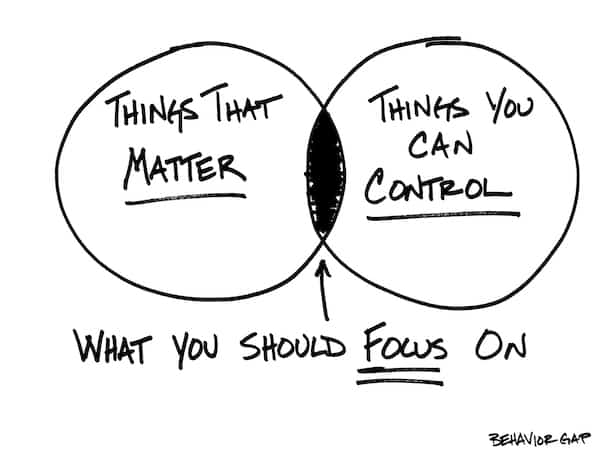
This is one of our favorite images from Richards, and the message couldn’t be clearer: two circles, one labeled Things That Matter and the other Things You Can Control. The small dark space where they overlap is what you should focus on.
A long list on each side, a short list in the middle
There’s a long list of things in either circle. But the list of things in both is surprisingly small.
It’s easy to spend energy on the first two columns. The headlines, the market’s ups and downs, and the urge to tinker can eat up a lot of attention. But that energy does little to move you closer to your goals.
6 things that matter and that you can control
When it comes to investing, here are six things that truly fall in the sweet spot:
- Your level of risk. How you split your money between stocks and bonds is one of the biggest drivers of your results, and it’s entirely your choice.
- Your diversification. A thoughtful asset allocation strategy spreads your money across different types of investments, so no single one can sink your plan.
- Your discipline. An Investment Policy Statement puts your strategy in writing and helps you stick to it when emotions run high.
- Where you hold your investments. Placing the right investments in tax-advantaged accounts, like IRAs and 401(k)s, can help you keep more of what you earn.
- What you pay your advisor. Know exactly how your advisor is paid, and make sure you’re getting real value for it.
- What you pay for your funds. Every mutual fund and ETF has costs. Lower fees mean more of your return stays in your pocket.
Notice what’s not on this list: predicting the market, timing the next downturn, or picking the next big winner. Those may feel important, but they’re largely out of anyone’s control.
The question to ask yourself
The next time you start to worry about your investments, pause and ask:
Is what I’m worried about important, AND is it something I can control?
If the answer is no, let it go. If the answer is yes, that’s where your time and energy belong.
Once you focus your effort only where these two circles meet, you’ll make better decisions, and you’ll sleep a lot better at night.
If you have questions about anything in this post, reach out to us anytime. At F5 Financial, we enjoy working with entrepreneurs, corporate executives, and families to define their goals and make sure they have a plan in place to achieve them.