
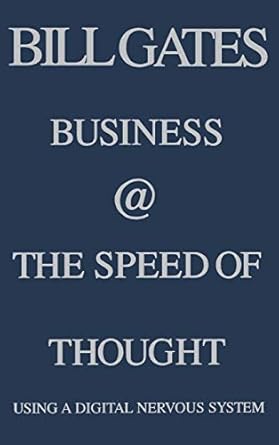
Book Summary – Business at the Speed of Thought

Imagine a world where getting online felt like an event. Screens hummed, connections crackled, and “being connected” wasn’t constant—it was intentional. That was the backdrop when Bill Gates introduced a bold idea: the future would belong to those who could move information faster—and think even faster.
At its core, Business at the Speed of Thought isn’t really about technology. It’s about momentum. It’s about how ideas travel inside an organization—and what happens when they move freely versus when they get stuck.
Information: The Real Competitive Edge
Think about your business (or any business). What actually drives it forward? Not meetings. Not reports. Not even strategy decks.
It’s the invisible current of information.
When information flows smoothly:
- Decisions happen faster
- Problems surface earlier
- Opportunities don’t get missed
When it doesn’t?
- Meetings turn into status updates
- Teams operate in silos
- Leaders make decisions in the dark
The difference isn’t effort—it’s access.
Stop Managing Reports. Start Managing Reality.
One of the most powerful ideas here is simple: everyone—not just executives—needs access to meaningful data.
The closer someone is to the problem, the more valuable their insight becomes. But that only works if they can actually see what’s happening.
A modern organization shouldn’t rely on:
- Delayed reports
- Filtered summaries
- One-time data pulls
Instead, it should feel alive—responsive, aware, and constantly learning.
The Shift from Collecting Data to Using It
Most companies aren’t short on data. They’re drowning in it.
The real advantage comes from turning that data into action:
- Spotting patterns before competitors do
- Understanding customers beyond surface-level feedback
- Adjusting strategy in real time, not after the fact
In other words, information shouldn’t sit—it should move.
The Hidden Cost of Slow Communication
Here’s a subtle but critical point: bad news is only dangerous when it travels slowly.
Organizations that thrive don’t avoid problems—they surface them quickly. They create environments where:
- Issues are shared early
- Feedback flows freely
- Solutions are collaborative
Speed isn’t just about execution. It’s about awareness.
From Busy Work to Thinking Work
As systems improve, something interesting happens: people spend less time gathering information—and more time thinking.
That shift changes everything.
Instead of:
- Chasing numbers
- Updating spreadsheets
- Repeating routine tasks
Teams can focus on:
- Solving meaningful problems
- Improving customer experiences
- Driving innovation
The real upgrade isn’t technology—it’s how people use their time.
Simplicity Wins
Complex systems don’t make companies smarter. They slow them down.
The most effective organizations:
- Break big problems into smaller pieces
- Build flexible systems that evolve over time
- Prioritize clarity over complexity
Because speed doesn’t come from doing more—it comes from doing less, better.
The Big Takeaway
The future doesn’t reward the biggest companies or even the smartest ones.
It rewards the fastest learners.
Organizations that:
- Share information openly
- Respond quickly
- Adapt continuously
…are the ones that stay ahead.
Everything else is just noise.
If you would like to have a copy of this summary in PDF form to share with others you can click here