Financial Planning for Families, Corporate Executives and Business Owners
A life of freedom and significance starts here.
F5 Financial is a proud member of





F5 Financial is a fee-only financial advisory firm that takes a holistic approach to financial planning, personal goals, and behavioral change.
We are a NAPFA approved financial planning firm with a focus on serving Corporate Executives, Entrepreneurs, and Families.
We provide comprehensive planning services and recommend low cost, academically proven, passive investment solutions.
We serve a variety of clients throughout Naperville, the Chicago area, the Metro Atlanta area, South Florida, and across the US.
How We Help

Retirement Planning
Ongoing planning that coordinates your goals, cash flow, investments, tax strategy, insurance, and estate plan into one picture for retirement.

Investment Management
Factor-based, evidence-driven portfolio management for people who want their investments coordinated with their taxes, insurance, and estate plan.

Estate Planning
Coordinated estate and legacy planning that connects your will, trust, and beneficiary decisions to the rest of your financial plan.

Tax Planning
Coordinated tax strategy for corporate executives, business owners, and families who want their CPA, their portfolio, and their financial plan working from the same numbers.
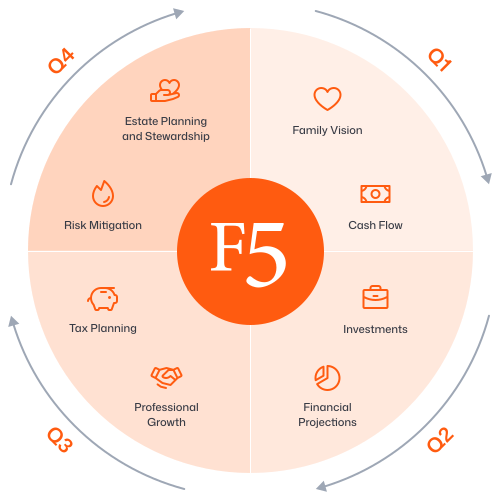
The Financial Health Cycle™
We'd like to introduce you to the Financial Health Cycle, our proprietary planning process. We've worked with scores of clients over the years, and we've listened. Each experience has contributed to refining the Financial Health Cycle and enhancing our ability to serve you with excellence.
Our process begins with your goals and vision and leads to the execution of your financial plan. Cash flow management, insurance, taxes, work benefits, education planning, and investment management are all integrated into this plan.

These reviews were voluntarily provided by our clients. No compensation was provided to clients in exchange for their reviews. We requested ratings from all clients via email. Clients who responded either wrote their own review, or collaborated with a third-party marketing agency that crafted their spoken words into written testimonials. Each client posted their own feedback on Google.

Our Offices



Let’s build a portfolio that can provide for you and your loved ones.
Start by scheduling your complimentary meeting with us. Our team member will be in touch shortly to confirm your call.