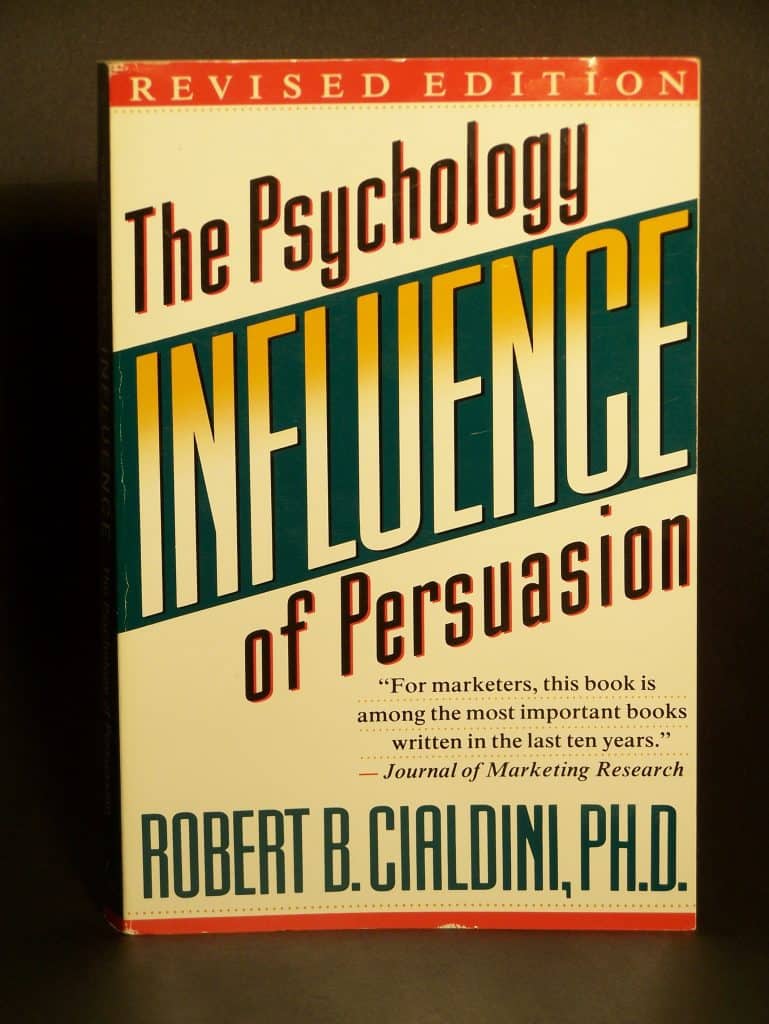
Book Summary – Influence: The Psychology of Persuasion

The Invisible Forces That Shape Our Decisions
We all like to believe we make decisions independently—free from outside influence. In reality, that belief is one of the greatest illusions we carry. Human behavior is deeply shaped by subtle cues, emotional triggers, and psychological shortcuts that guide our actions far more often than we realize.
Influence isn’t always loud or manipulative. Most of the time, it’s quiet, automatic, and incredibly effective.
This book explores the most powerful patterns of influence—how they work, why they’re effective, and how easily they can shape our behavior. Whether your goal is to protect yourself from being influenced or to better understand how influence operates in business, leadership, and everyday life, the insights are eye-opening.
Why We’re So Easy to Influence
Our minds are designed to simplify decision-making. To cope with daily complexity, we rely on automatic responses—mental shortcuts that help us move quickly without overthinking every choice.
These shortcuts are efficient, but they come at a cost.
Throughout the book, the author introduces what can be thought of as automatic influence triggers. These triggers share a few defining characteristics:
-
They cause predictable, almost mechanical responses
-
They require very little effort to activate
-
They consistently produce reliable results
This combination makes them incredibly powerful—and easy to misuse.
A memorable example illustrates this perfectly: a dramatic setup that creates emotional stress, followed by sudden relief. The emotional contrast shifts perspective so dramatically that a relatively minor issue feels insignificant by comparison. The reaction is predictable—and that predictability is the point.
The Principle of Reciprocity
People feel compelled to give back when they receive something—even when they didn’t ask for it.
A small gesture often creates a disproportionate sense of obligation. This instinct is deeply ingrained and operates almost automatically. The return favor doesn’t need to be equal; in fact, it’s usually much larger.
This explains why free samples, small gifts, or unexpected favors are so effective. Once something is given, the internal pressure to reciprocate kicks in—and decision-making becomes emotional rather than rational.
Awareness is the only real defense.
Commitment and Consistency
Once we commit to something, we feel a powerful need to stay consistent with that decision—even when it no longer serves us.
Why? Because consistency feels safe. It simplifies choices and protects our self-image. Changing course requires effort, reflection, and sometimes discomfort.
Commitments become even stronger when they are:
-
Public
-
Written down
-
Shared with others
-
Difficult or effort-intensive
These factors lock us into a mental identity—and future behavior follows that identity.
A helpful safeguard is tuning into internal warning signals:
-
That subtle feeling of discomfort before agreeing to something
-
The emotional reaction you experience when you ask yourself later, “Would I make this same choice again?”
Your instincts often know the truth before logic catches up.
Social Proof: Following the Crowd
When situations are unclear, we instinctively look to others for guidance. If everyone else is doing something, it feels safe to follow along.
This behavior is especially powerful in moments of uncertainty. The assumption is simple: if others are doing it, it must be right.
The danger comes when:
-
Behavior is intentionally staged to create imitation
-
The group itself is mistaken
To avoid blindly following social proof, pause and ask:
“Am I doing this because it’s right for me—or because everyone else is doing it?”
The Power of Liking
We are far more likely to say yes to people we like.
Liking is built through:
-
Familiarity
-
Similarity
-
Compliments
-
Shared goals
-
Positive associations
This is why relationships matter so deeply in sales, leadership, and influence. However, liking someone should never be confused with evaluating the value of what they are offering.
The key is separating how you feel about the person from how you feel about the decision.
Authority: The Most Dangerous Influence
Authority carries an enormous psychological weight. We are conditioned from a young age to follow those who appear knowledgeable or powerful.
The challenge is that perceived authority is not always real authority.
Uniforms, titles, credentials, and confidence can all trigger compliance—even when they shouldn’t.
The most important question to ask:
“Is this person truly qualified—and are they acting in my best interest?”
This form of influence is among the hardest to resist precisely because it feels socially and emotionally “correct” to comply.
Scarcity: The Fear of Missing Out
Scarcity triggers urgency.
When something feels limited, our desire for it increases dramatically. This reaction is fueled by two forces:
-
Fear of loss
-
Desire for freedom and choice
The moment scarcity appears, rational thinking often disappears.
A simple two-step defense:
-
Stop immediately when scarcity pressure appears
-
Ask whether the desire is based on a real need or a temporary want
Scarcity thrives on speed. Slowing down weakens its grip.
Final Thoughts
Influence isn’t inherently bad—it’s a natural part of human interaction. The danger lies in unconscious influence, where decisions are driven by emotion rather than intention.
If you would like to have a copy of this summary in PDF form to share with others you can click here
If you liked this post, you might want to check out these as well: